
The Alfama district of Lisbon: A tourist guide for 2025
To wander through Alfama is to step into the historic soul of Lisbon. This is the city’s oldest district, a labyrinth of steep, cobbled alleys and ancient houses that weave down the hill from the Castelo de São Jorge to the banks of the Tejo estuary.
For centuries, Alfama existed as a poor neighbourhood, its gritty, close-knit community home to sailors, dockers, and the city’s underclass. Today, these humble origins have given way to a vibrant and fashionable district, yet Alfama has fiercely held onto its authentic character. It is a place best explored with no fixed plan, by simply getting lost in its maze and discovering what lies around the next corner.
The district contains many of Lisbon’s most important historic buildings, from the formidable Sé Cathedral to the National Pantheon. Yet its real charm lies in the smaller details: the sound of Fado music drifting from a dimly lit bar, the scent of sardines grilling on an open charcoal barbecue, and the stunning views after every steep climb.
It is a district that rewards time and curiosity, offering a depth of experience far beyond the main tourist sights. This guide will provide everything you need to discover this fascinating district, helping you make the most of your visit.
Related articles:The Baixa district – The Belem district
Highlights of Alfama
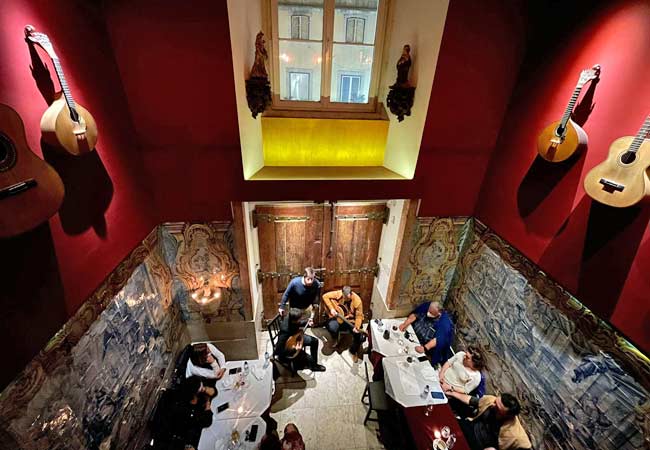
Fado - The haunting and melancholic music that originated in Alfama's historic quarters. Its sorrowful melodies, traditionally sung by the wives of sailors awaiting their return, are accompanied by the intricate sounds of the Portuguese guitar - guide to Fado in Lisbon
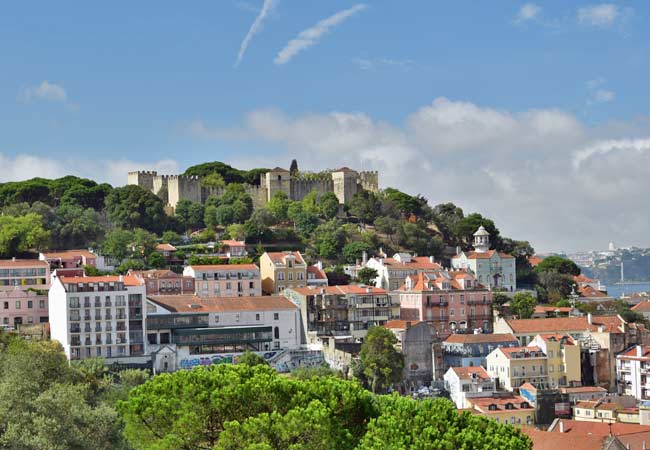
Castelo de São Jorge - Crowning Alfama’s highest hill is the ancient Castelo de São Jorge, where Portugal’s early kings once ruled. Climb its formidable battlements for spectacular views over the city and explore the citadel at its heart, with its flock of noisy peacocks! Castelo de São Jorge guide
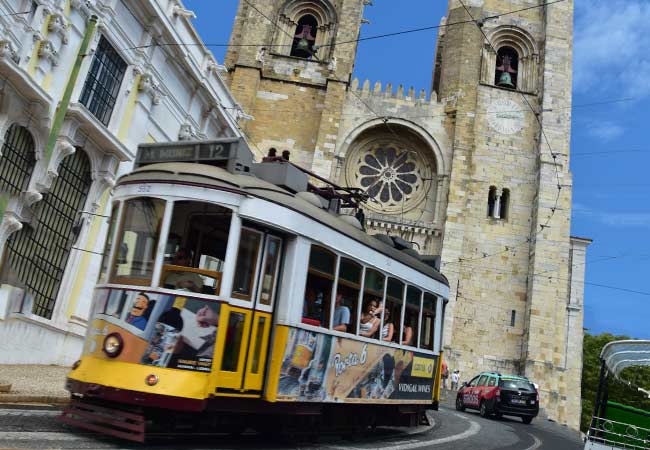
The number 28 tram – Step aboard the number 28 tram as it twists and rattles through the narrow streets of Alfama. These beloved, vintage yellow ‘Remodelado’ trams dating from the 1930s offer both a practical means of transport and an unforgettable sightseeing experience - 28 tram guide.
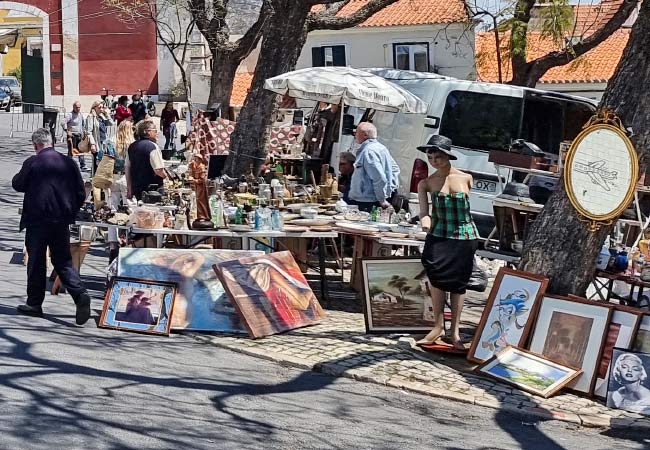
Feira da Ladra – This delightful flea market fills the Campo de Santa Clara every Tuesday and Saturday morning. Rummage for antiques, unique second-hand items, and local handicrafts at one of the city's oldest markets, with origins stretching back to the 12th century - Feira da Ladra guide.
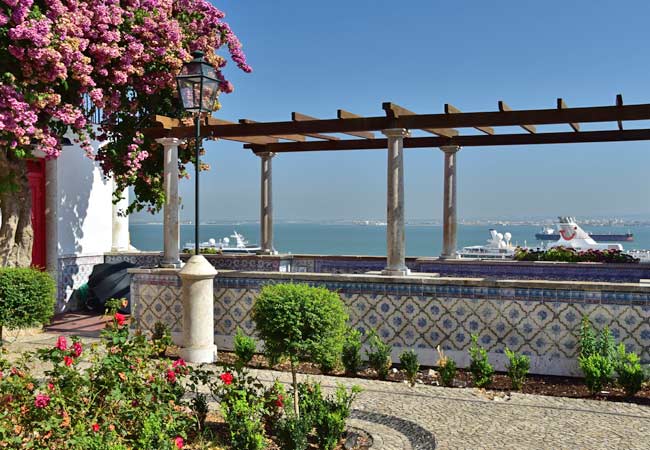
Miradouro de Santa Luzia – One of the finest views over Alfama and the Tejo Estuary, set within pretty gardens. This charming viewpoint, with its traditional azulejo tiles and bougainvillea-covered pergola, is tucked away beside the Santa Luzia church . Lisbon’s best viewpoints
A tour of Alfama
While getting lost in Alfama's charming streets is part of its appeal, a lack of direction can mean missing some of its most important sights.
To help you explore, we have provided a recommended tour route below. The main tour takes approximately 3-4 hours, with an optional extension (marked by the yellow line) to the Graça district and its spectacular viewpoint. Be aware that this extension involves a challenging uphill climb.
Sights along the route: 1) Santo António Church 2) Lisbon Cathedral 3) Roman Theatre (ruins) 4) Santa Luzia view point 5) Lisbon Castle 6) Portas do Sol plaza 7) Museu do Fado 8) Rua dos Remédios (shopping street) 9) Panteão Nacional 10) São Vicente de Fora church 11) Graça Plaza 12) Miradouro da Graça viewpoint 13) Graça convent 14) Arco de Jesus 15) Casa dos Bicos 16) Largo José Saramago
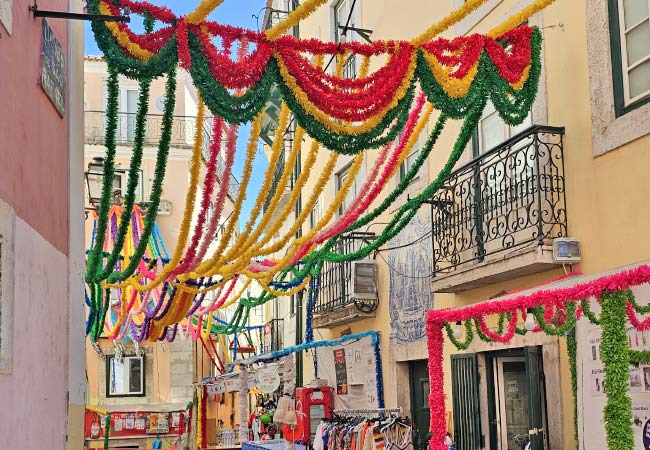
The pretty narrow streets of Alfama

A craft market held on the Largo do Chafariz de Dentro
Navigating Alfama: A Practical Guide
Alfama’s geography is defined by two steep hills, with a network of cobbled alleys and countless staircases connecting the Tejo Estuary to the castle and the neighbouring Graça district. With very few flat surfaces, exploring on foot can be physically demanding, especially during the intense heat of the summer months.
Insider Tip: Start at the Top
The smartest way to explore Alfama is to begin at the highest point and walk down. We recommend starting your tour at Largo da Graça (11), which is the highest point most tourists visit. From here everything is a downhill walk.
To reach the Largo da Graça, either catch an Uber or Bolt, or take the 28 tram from Martim Moniz or Rua da Conceição in Baixa. If you simply want to visit the castle, the number 737 bus route connects Praça da Figueira with the Castelo bus stop, just outside the castle entrance.
Alfama’s labyrinth of twisting alleys makes it easy to lose your bearings, particularly in the dense network of streets between Portas do Sol (6) and the waterfront. If you do find yourself disoriented, remember one simple rule: always head downhill. This will eventually lead you back to the wide-open avenues that line the Tejo Estuary.
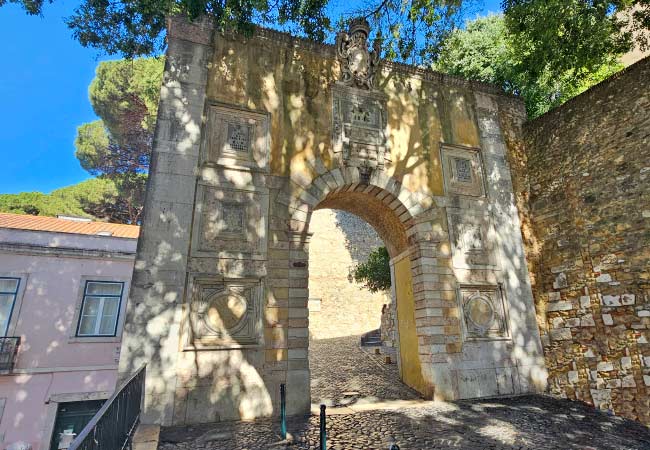
The route up to the castle
Staying in Alfama: What You Need to Know
Opting to stay in Alfama offers one of Lisbon’s most atmospheric areas of the city. Here, you trade generic hotel lobbies for narrow, cobbled streets and historic character. Many of the district's traditional houses have been converted into charming rental apartments, guesthouses, and boutique hotels, placing you right in the historic heart of the city.
However, the district's unique charm comes with practical challenges. While Alfama is within walking distance of the central Baixa district, its own transport links are limited. This means that any stay will inevitably involve a significant amount of walking up steep paths and staircases, which can be particularly challenging with luggage.
Ultimately, Alfama is the perfect base for the active, independent traveller who values atmosphere over convenience. The reward is waking up in a truly unique neighbourhood. However, visitors with mobility issues, or families with young children, may find the demanding terrain and lively nighttime atmosphere less suitable.
The map below shows the best accommodation and hotels in the Alfama district. If you adjust it to suit your holiday dates, it will show the latest prices and availability:
Booking.comAlfama's Best Viewpoints (Miradouros)
Alfama's hilly landscape is dotted with magnificent viewpoints, or miradouros, each offering a unique perspective over Lisbon's rooftops and the Tejo Estuary.
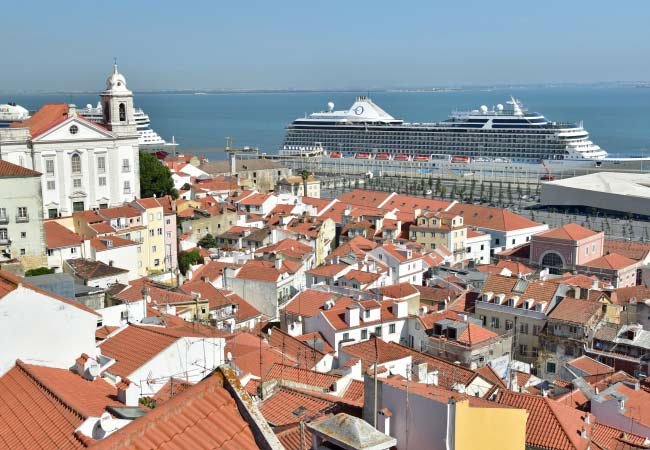
Miradouro das Portas do Sol: This is arguably Lisbon’s most famous viewpoint, offering a classic panorama over a sweep of terracotta roofs and whitewashed houses. The view extends down to the waterfront, where vast cruise ships often dwarf the modern cruise terminal. As it’s on the main tourist route of the number 28 tram, expect it to be busy.
Miradouro de Santa Luzia: Just a short walk from Portas do Sol is this charming and less hectic alternative. Tucked away beside the Igreja de Santa Luzia, it offers the same wonderful perspective but from within a delightful garden framed by traditional azulejo tiles and a bougainvillea-covered pergola.

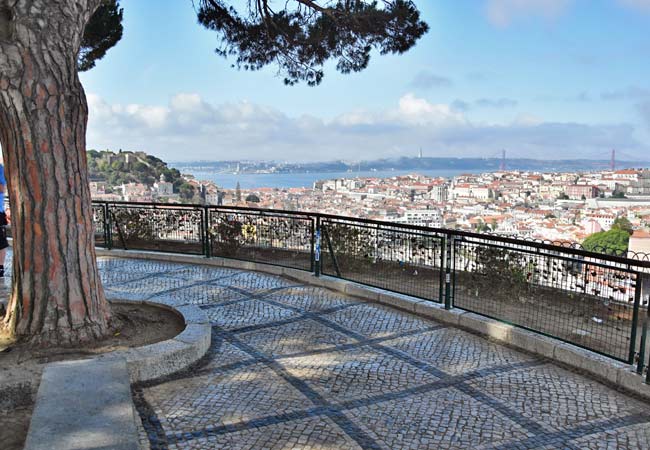
Miradouro da Graça: On the edge of the neighbouring Graça district, this viewpoint provides commanding views over the city, looking back towards the Castelo de São Jorge. With a popular kiosk at its centre, it’s a favourite local hangout, especially in the evening. Be prepared for a very steep walk to reach it. - Miradouro da Graça
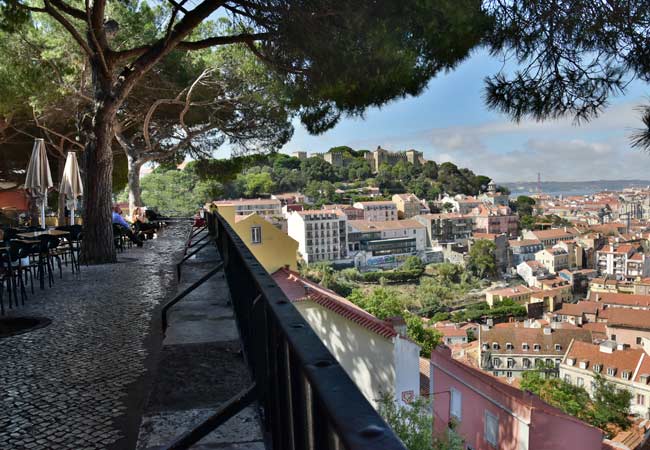
Miradouro da Senhora do Monte: For those willing to make the extra climb from Graça, this is Lisbon’s highest and most breathtaking viewpoint. The uninterrupted panoramic view is the ultimate reward for the challenging walk - Miradouro da Senhora do Monte.
Alfama nightlife
Alfama nightlife is a much calmer version of the Bairro Alto district, consisting mostly of late-night restaurants and bars. Most bars in Alfama are small, often with just a handful of tables, giving them an intimate and welcoming atmosphere. Alfama is not for wild nights; it's a place to chat and socialise with friends. Some of the best bars in Alfama include:
Memmo Alfama Wine Bar - Stylish rooftop bar with phenomenal views and an extensive wine list.
Outro Lado - Cozy craft beer bar with a great selection of Portuguese and international beers.
Crafty Corner - Top-rated for its wide range of craft beers and relaxed vibe.
Medrosa d'Alfama - Popular bar serving Portuguese petiscos with wine and beer in a traditional setting.
Tejo Bar - Authentic dive bar loved by locals for its no-frills atmosphere and affordable drinks.
Public Transport in Alfama
Public transport within the steep, narrow streets of Alfama is extremely limited. The main services through the district are the number 12 tram or 28 tram, which follow the same winding route. Be aware that these trams become exceptionally crowded, and they are notorious for skilled pickpockets; valuables should be kept secure at all times.
For a much more direct route to the castle, the 737 bus from Praça da Figueira is the best option, as it drops you right outside the main entrance.
While Alfama is served by two Metro stations, Terreiro do Paço and Santa Apolónia, both are inconveniently located at the bottom of the hill on the waterfront. They are useful for reaching the general area, but be prepared for a long and steep uphill walk from either station to get to the heart of the district.
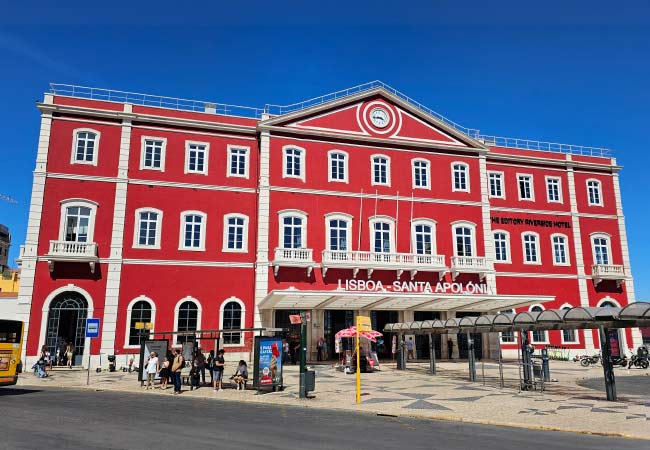
Santa Apolónia metro station is part of the Santa Apolónia train station complex, the main intercity train station of Lisbon
How much is a day trip to Alfama going to cost?
Alfama can be an inexpensive day trip if you choose to wander the district, enter the free religious buildings and admire the viewpoints. Entrance fees and costs are:
• A ride on the number 28 tram – €3.10
• Lisbon Castle entrance fee – €15.00
• Sé Cathedral entrance fee – Free
• Sé cloisters and treasury - €5.00
• Museu de Santo António - €3.00
• Roman Amphitheatre – Free
• Museu de Teatro Romano - €3.00
• Panteão Nacional - €8.00
• Fado Museum - €5.00
• Metro single ticket – €1.85
Why is Alfama the oldest section of Lisbon?
Alfama is the oldest section of Lisbon because it largely survived the devastating earthquake of 1755 that destroyed much of the city. The district's location on a solid rock hill reduced the impact of the earthquake's shockwaves, and its elevation protected it from the subsequent tsunami's flooding.
Consequently, Alfama's streets still follow the original medieval layout, remaining mostly unchanged since the city's early days.
The best sight in Alfama - Lisbon castle
The best tourist attraction of the Alfama district is the Castelo de São Jorge. This castle has been entwined with Portugal’s early history and was the location in which the Christian Crusaders defeated the North African Moors in 1147. The castle’s importance waned from the 15th century and was badly damaged by the 1755 earthquake, but was restored to its former magnificence in the 1940s.
For your visit, there is a lot to see in the castle, including the fortified keep, a museum and views from the battlements. A typical visit lasts 1 hour, and the adult entrance fee is €15.
Related articles: Guide to Lisbon castle
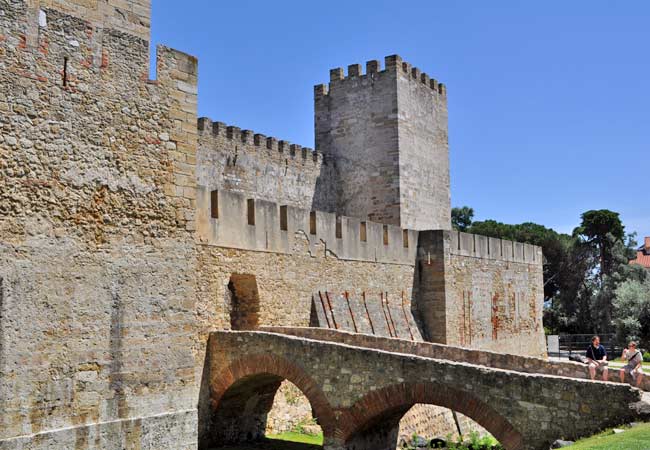
The main keep of the castle
Alfama's Best Activity – Riding the No. 28 Tram
One of the most enjoyable activities in Alfama is riding the iconic number 28 tram. This historic tram route connects the districts of Graça and Estrela, with the most scenic section passing through the charming streets of Alfama.
Due to the narrow and steep nature of the route, modern trams cannot navigate it, so the traditional Remodelado trams from the 1930s are still in use, offering a unique journey through one of Lisbon's most beloved neighbourhoods.
Related articles: The 28 tram
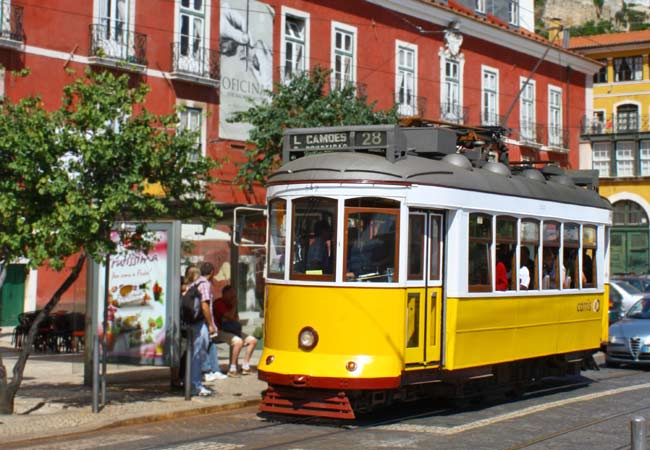
The E28 as it passes through the Largo das Portas do Sol
The Feira da Ladra market
The Feira da Ladra is Lisbon's oldest flea market, held every Tuesday and Saturday on the Campo de Santa Clara street near the Panteão Nacional. Originating in the 13th century and established in its current location since 1882, the market offers a vibrant array of items, from antiques and collectibles to vintage clothing and books.
Despite its name, which translates to "Market of the Female Thieves," it is a safe and lively spot, attracting tourists and locals alike. The market opens at 8 am, and while it officially ends at 2 pm, the best deals are usually found before 11 am. Visitors are advised to bring cash, and be prepared to haggle for the stand out items.
The market contains a wide range of stalls
Main Tourist Sights of Alfama
The Sé Cathedral
The Sé de Lisboa is the solid and imposing cathedral that dates from the 12th century. The cathedral is a blend of Gothic and Romanesque styles and its interior is very austere when compared to the extravagance of the Mosteiro dos Jerónimos or numerous baroque churches in Lisbon.
The cathedral was constructed on the site of a major mosque and excavations of this original structure can be seen in gothic cloisters to the rear of the cathedral.
Related articles: The Sé cathedral
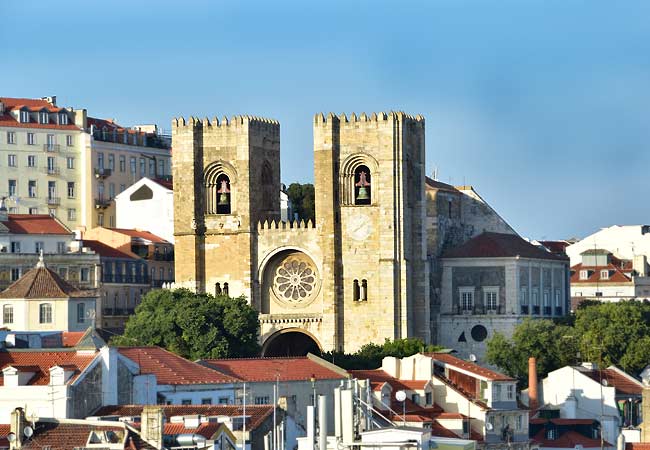
The magnificent Sé Cathedral
Igreja de Santo António de Lisboa
Saint Anthony is the patron saint of Lisbon, and the church dedicated to him was constructed on his birthplace.
Saint Anthony was born in 1195 but the Baroque-Rococo styled church dates from 1767, as the original church was destroyed by the devasting 1755 earthquake.
Related articles: Igreja de Santo António de Lisboa
The National Pantheon (Panteão Nacional)
The Panteão Nacional, located in the Church of Santa Engrácia in Lisbon, is a significant monument that serves as the final resting place for many of Portugal's important figures. Originally built in the 17th century and designated as the National Pantheon in the 20th century, it houses the tombs of notable personalities such as poet Luís de Camões, explorers Vasco da Gama and Henry the Navigator, and several Portuguese presidents. The Pantheon's baroque architecture, with its impressive dome and marble interior, makes it a notable cultural and historical landmark.

The Fado Museum
Fado is an emotional and sorrowful style of music that originated in the tough neighborhoods where sailors' families lived. Sung by a solo singer and accompanied by a traditional Portuguese guitar, this mournful yet powerful music reflects the emotions of sailors' wives waiting for their husbands to return.
The Museu do Fado details the history and cultural significance of this poignant musical tradition, offering visitors a deep dive into the heart of Portuguese heritage.
Related articles: Fado music
Chafariz d’El Rei
The Chafariz d’El Rei (king’s fountain) dates from the 13th century and supplied drinking water to ships moored on the banks of the Tejo. This fountain was on the outside of the city walls, while the Chafariz de Dentro (inside fountain) served the residences of Alfama and is in the Largo do Chafariz de Dentro (location 13).
Casa dos Bicos
The Casa dos Bicos, or "House of Spikes," is named after its distinctive façade adorned with diamond-shaped spikes. It was constructed in 1523 by the first Viceroy of India, who was inspired by similar "spiked" buildings in Italy and Spain. The top two floors were destroyed by the 1755 earthquake and were only restored in 1981. Today, it houses a museum that showcases artifacts from the Roman and Moorish periods and features exhibitions about the life and works of the renowned Portuguese author José Saramago.

Roman Amphitheatre (Teatro Romano)
Lisbon was a major Roman city, and beneath the streets of Alfama lie the remains of a Roman amphitheatre that once accommodated 5,000 spectators. Nearby, the Museu Teatro Romano offers a glimpse into this ancient past, showcasing numerous artifacts uncovered at the site. This small museum provides valuable insights into the city's Roman heritage and the amphitheatre's historical significance.

The remains of the Roman Amphitheatre in Lisbon
Is Alfama safe?
Alfama is generally a safe area of Lisbon, but common sense should be used, especially late at night. The biggest risk to most tourists are the pickpockets who operate on the packed trams.
Alfama is significantly safer for visitors than it was 10 years ago, due to the increase in tourism and foreign investment. However, this has come at the price of the community atmosphere, with locals struggling to afford to live here.
Discover more of Lisbon with our most popular guides
Lisbon Top 10

Discover Lisbon's top 10 must-see attractions and experiences
Where to stay?

The best districts to stay in Lisbon for every type of traveller!
3 days in Lisbon

The perfect 3-day itinerary for history, food, and fun!
Secret Lisbon

Discover Lisbon's hidden gems and authentic experiences
1-day walking tour
If it's your first day in Lisbon, follow our recommended walking tour!
Need a hotel?

Discover the best hotels in Lisbon and book at the lowest prices
Lisbon Nightlife

Top nightlife spots in Lisbon for an unforgettable evening
Lisbon day trips
Unforgettable Lisbon day trips: Hidden gems and scenic escapes
Lisbon beaches
Relax and unwind on Lisbon's picturesque and tranquil beaches
Children activities

Discover the best sights and activities for children in Lisbon
1 week holiday
Explore Lisbon in a week: History, culture, and unforgettable sights
Where to eat
The best restaurants in Lisbon for every budget
48 hours Lisbon
Experience Lisbon’s vibrant culture and history in just two days!
Lisbon's sunsets

Experience breathtaking Lisbon sunsets from the city's best viewpoints!
Home Page
Welcome to Lisbon: your guide to the city
Baixa district
Baixa: Lisbon's heart, full of history, culture, and bustling energy
Belem district

Belém: rich history, stunning architecture, and delicious pastries
Shopping?

Shop till you drop in Lisbon's vibrant markets and boutiques!
Alfama district
Lisbon's oldest district with stunning views, charming streets and Fado music
Cost of a holiday

How much does a Lisbon holiday cost? Your complete budget guide
Parque das Nações

The ultra-modern side to historic Lisbon
Alcântara district
Lisbon’s trendy and artisan district
Sintra

Ancient castles & opulent palaces - the best day trip from Lisbon
Costa da Caparica
23km of beautiful beaches south of Lisbon – perfect for a beach day!
Cascais
19th century elegance at the heart of the Portuguese Riviera
Only 24 hours
Only 24 Hours in Lisbon: Maximize your sightseeing in one day!
Viewpoints
Experience Lisbon from above: Top viewpoints with breathtaking views
Dishes to try

Delicious meals and authentic dishes to try while in Lisbon
Airport guide

Airport guide and onward travel from the airport
Wet day

Wet Day in Lisbon: Discover the best rainy-day activities and attractions
Art & museums

Unveil the city's cultural and artistic gems in Lisbon’s best museums
If you've found our content valuable, we'd welcome your support.
The digital publishing landscape has evolved significantly. As a small independent publisher, we face growing challenges. Search engines increasingly favour paid content over organic results, while AI-generated content often reproduces original work without attribution.
To support our work, please consider bookmarking this page (press Ctrl + D) for quick access. If you find an article helpful, we'd be grateful if you'd share it with friends on social media.
For specific questions, please see our Reddit community at r/LisbonPortugalTravel.
Should you notice any outdated or incorrect information, please contact us at
Thank you for helping us continue to provide valuable content in an increasingly challenging digital environment.
A complete list of all of our Lisbon articles
Getting started
Lisbon's districts
Sightseeing
Transport guides
Itineraries
Lisbon's beaches
Lisbon Trams
Lisbon's stations
The Lisbon region
Day trips from Lisbon
Sintra
Cascais
Evora
Sesimbra
Obidos
Ericeira
Setubal
Central Portugal
Portugal Guides
North Portugal
Porto
South Portugal
Alfama Lisbon Guide © 2009-2025 LisbonLisboaPortugal.com - Privacy Policy and Contact Us - About us


